
Details That Define Room Character
Trim and Molding Installation in Washington Township for interiors lacking architectural detail and rooms needing visual refinement
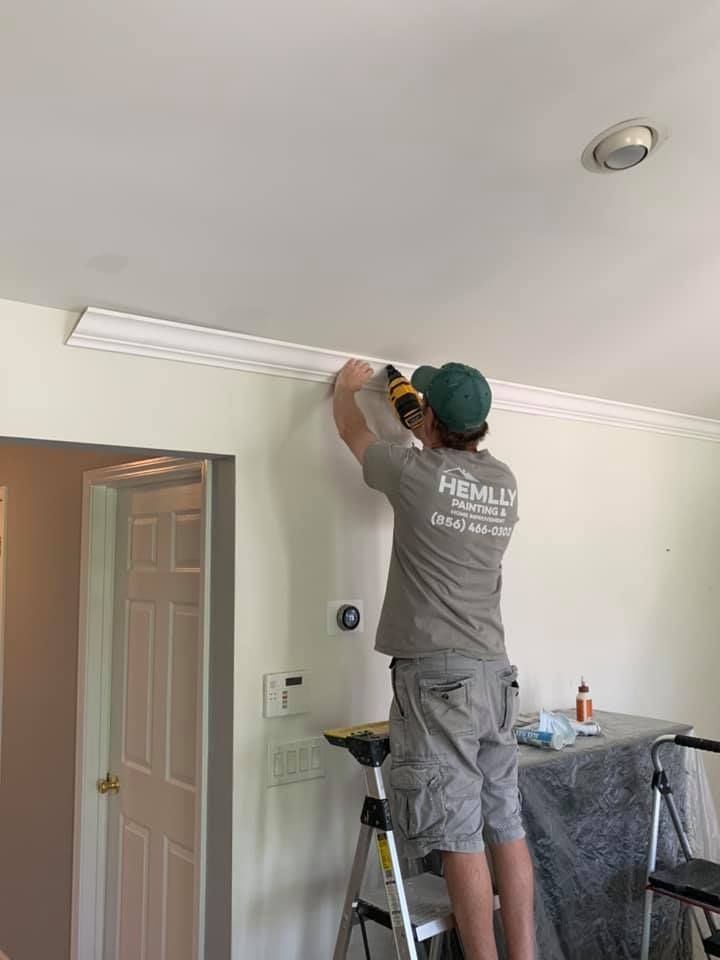
Builder-grade construction throughout Washington Township typically includes flat baseboards, plain door casings, and no crown molding, which creates interiors that feel unfinished even when freshly painted. Crown molding at the ceiling line draws eyes upward and makes standard eight-foot ceilings appear taller, while detailed baseboards provide visual weight that grounds wall color and protects lower walls from furniture impact and vacuum cleaner contact. Hemlly Painting & Home Improvement LLC installs trim profiles that match your home's architectural style—simple lines for contemporary spaces, traditional profiles for colonial and craftsman interiors—with joints cut precisely enough that seams close tight without gaps or filler.
Installation requires measuring each wall section individually since rooms are rarely perfectly square, cutting angles that account for actual corner measurements rather than assumed ninety degrees, and securing molding so it sits flush against both wall and ceiling without gaps that appear once paint reveals imperfect contact. Joints receive caulk that flexes with seasonal wood movement instead of cracking, and nail holes get filled level with the surface so they disappear under finish coats.
Arrange a consultation to review molding profiles that complement your existing interior finishes and furniture scale.
How Trim Upgrades Work With Interior Painting
New trim installed over existing paint shows gaps where wall texture doesn't meet wood perfectly, which requires caulking before painting to create continuous lines between surfaces. Paint-grade trim gets primed and finished after installation, allowing nail holes and joints to receive final filling once wood has acclimated to your home's humidity levels and completed initial movement. Stain-grade trim requires pre-finishing before installation since sanding after mounting would damage surrounding wall surfaces, though this approach shows fastener holes more prominently and limits adjustment options.
Once complete, you notice clean lines where walls meet ceilings and floors, crisp reveals around doors and windows that add shadow depth, and transitions between rooms that feel intentional rather than abrupt. Combining trim installation with interior painting allows color coordination between wall and woodwork finishes—bright white trim makes wall colors appear richer, while off-white or colored trim creates softer contrast in bedrooms and formal spaces.
Crown molding installation works best in rooms with flat ceilings and minimal obstructions from HVAC vents or light fixtures, since complex ceiling planes require custom fitting that increases labor substantially. Baseboards can replace existing trim or add height by installing new molding above original boards, which avoids removal work while creating more substantial visual impact along floor lines.
What Property Owners Usually Ask
Trim installation questions focus on style selection, coordination with existing finishes, and understanding what different molding profiles accomplish visually and functionally.
What trim profiles work best for different home styles in Washington Township?
Colonial and traditional homes suit built-up crown molding with multiple profiles stacked for depth, craftsman styles pair with flat stock and simple lines, and contemporary spaces often use minimal baseboards with sharp edges rather than rounded traditional profiles.
How does paint versus stain finish affect trim installation approach?
Painted trim allows pre-primed finger-jointed material that costs less than clear wood while finishing identically, whereas stain-grade trim requires clear wood free of knots and color variation, which increases material cost significantly but shows natural grain character.
When should trim installation happen relative to interior painting?
New trim goes up after wall painting but before final trim coats, which allows painters to cut clean lines where wall color meets white woodwork without taping or getting wall paint on fresh trim surfaces.
What difference does trim height make in room appearance?
Taller baseboards, typically five to seven inches, make rooms feel more substantial and traditional, while shorter three to four inch baseboards maintain contemporary proportions, and crown molding sized to room scale prevents overwhelming small spaces or appearing insignificant in large rooms with high ceilings.
How does molding installation affect existing walls and surfaces?
Nail holes from mounting are minor and get filled during finishing, though removing old trim before installing new profiles sometimes pulls wall paint or drywall paper, requiring touch-up before new trim goes up and paint coats begin.
Hemlly Painting & Home Improvement LLC provides trim installation estimates that include material specifications, finish options, and coordination with painting schedules to deliver complete room transformations. Request a trim and molding consultation to see profile samples and discuss which details will enhance your specific interior spaces.