Walls Ready for Finish Coats
Drywall Installation and Repair in Washington Township for damaged walls, ceiling cracks, and surfaces requiring smooth finish preparation
A settling foundation crack that started as a hairline in your living room ceiling has widened to a quarter-inch gap, nail pops dot the wall above your staircase where temperature changes flex framing lumber, and the bathroom ceiling shows brown staining where a previous leak soaked through drywall before you caught the plumbing problem. These failures telegraph through any paint applied over them—patching compound shrinks in deep holes, stress cracks reopen along taped seams, and water-damaged drywall remains soft even after drying. Hemlly Painting & Home Improvement LLC removes compromised sections and installs new drywall that sits flush with surrounding surfaces, then applies joint compound in progressive layers that feather invisible transitions between old and new material.
Repair work involves cutting out damaged drywall to the nearest stud centers, securing new panels with screws spaced to prevent future fastener pops, and taping seams with mesh or paper depending on joint location and stress patterns. Compound application happens in three coats minimum—the first embeds tape, the second builds thickness, and the third feathers edges until your hand cannot detect where repair meets original surface.
Request an assessment to identify whether visible damage indicates localized repair needs or underlying issues requiring broader attention.
What Separates Temporary Patches From Permanent Repairs
Hardware store patch kits that promise one-step repairs create convex mounds that shadow under paint, while proper finishing involves progressive sanding between compound coats that creates concave transitions invisible once primed. Stress cracks along ceiling seams reopen unless underlying movement gets addressed—sometimes requiring additional fasteners in framing or flexible caulk in joints where dissimilar materials meet. Water-damaged drywall that feels firm after drying has lost paper facing adhesion, which causes paint to bubble and peel within weeks as residual moisture evaporates through the compromised surface.
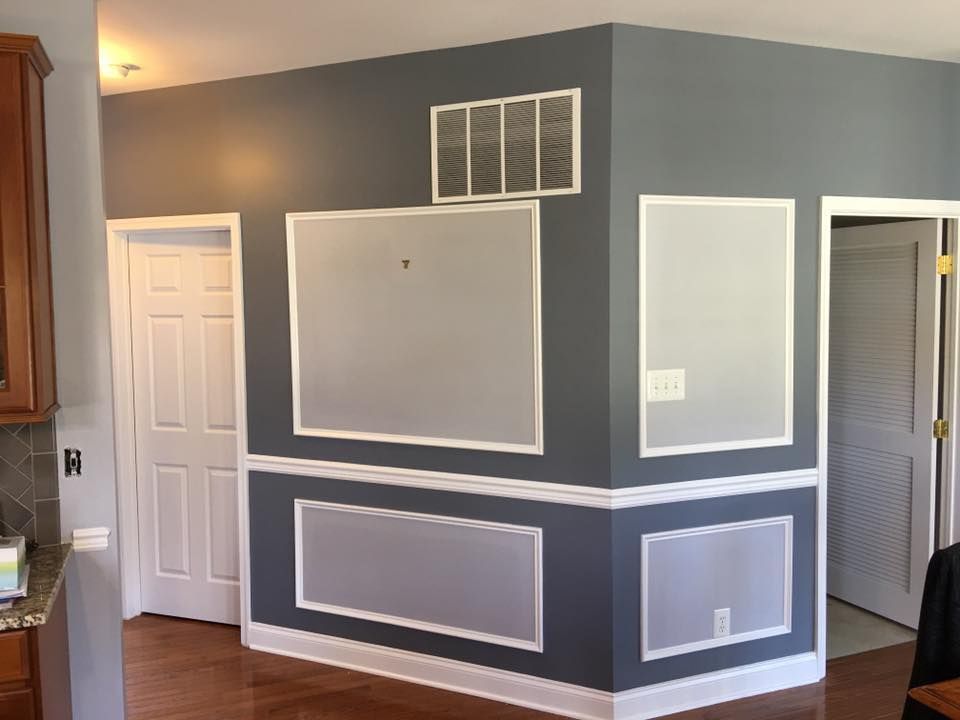
Completed repairs look identical to surrounding wall texture once painted, with no ridges marking patch boundaries and no shadows appearing when light rakes across the surface at low angles. Full drywall installation projects in Washington Township deliver smooth walls throughout renovated spaces, ready for primer without additional surface preparation beyond dusting.
Room additions and basement finishing projects require complete drywall installation including taping all seams, finishing inside and outside corners with metal or paper bead, and creating the smooth surface that distinguishes finished interior spaces from construction zones. Texture matching for repairs in existing rooms involves replicating knockdown, orange peel, or smooth finishes so repairs blend with surrounding surfaces.
Questions Before Starting Your Project
Drywall work raises questions about repair permanence, dust control, and timeline expectations for projects ranging from small patches to full room installation.
What causes drywall cracks to reappear after repair?
Recurring cracks typically indicate ongoing movement from foundation settling, inadequate framing support, or seasonal expansion cycles in building materials, which require addressing the underlying cause rather than repeatedly patching the surface symptom.
How many compound coats create a paintable finish?
Minimum three coats allow proper feathering and sanding to achieve invisible transitions, with each layer drying overnight before the next application, though larger repairs or textured surfaces may require additional coats to match surrounding wall appearance.
What preparation minimizes dust during drywall sanding?
Plastic sheeting seals doorways to contain dust in the work area, though fine particles still spread through HVAC systems if not turned off during sanding, and final cleanup involves vacuuming walls and surrounding surfaces before any painting begins.
When does water-damaged drywall need replacement versus repair?
Drywall soaked enough to feel soft or spongy requires replacement even after drying since paper facing has separated from gypsum core, while surface staining on otherwise firm drywall can receive primer-sealer and paint without replacement.
How soon after drywall repair can painting begin in Washington Township homes?
Compound requires twenty-four hours minimum drying time between coats, with final sanding and priming happening once all layers have cured completely, typically allowing paint application two to three days after the last compound coat goes on.
Hemlly Painting & Home Improvement LLC combines drywall repair with painting services to ensure proper surface preparation and finish quality throughout your project. Contact us for a drywall estimate that identifies repair scope and coordinates with your painting timeline.